
Top 10 Fire Sprinkler Types for Global Buyers
Choosing the right Fire Sprinkler system is a practical risk decision, not a simple product comparison. A warehouse with twelve-meter racks, a hotel corridor, and a cold-storage room face very different fire conditions. This guide examines ten widely used Fire Sprinkler types, including wet pipe, dry pipe, pre-action, deluge, ESFR, sidewall, residential, water mist, foam-water, and concealed sprinklers.
Reliable evidence supports their value. The National Fire Protection Association’s U.S. Experience with Sprinklers report found that sprinklers operated in approximately 92% of reported structure fires large enough to activate them. When they operated, they were effective in about 96% of cases. These figures are persuasive, but they are not universal promises. Building design, maintenance, water supply, installation quality, and fire type can change the result.
Market forecasts also indicate continued global demand for automatic fire protection. Reports from MarketsandMarkets and Grand View Research identify industrial construction, logistics facilities, commercial buildings, and infrastructure upgrades as major growth drivers. Their estimates differ, partly because market definitions and regional data vary. That weakness deserves attention.
A ranking can never be perfectly universal.
Global buyers should compare response temperature, coverage area, corrosion resistance, operating pressure, spare-part access, and inspection requirements. The International Building Code, NFPA standards, EN standards, and local authority requirements may lead to different choices. Certification from organizations such as UL, FM, and LPCB can strengthen procurement confidence, but certification alone does not replace hydraulic design.
This introduction uses documented industry evidence and field-relevant considerations. It also recognizes an uncomfortable truth: the cheapest sprinkler may become the most expensive choice after installation constraints appear. Each type has a useful place. None is automatically correct.
Understanding Fire Sprinkler Systems and Their Main Classifications
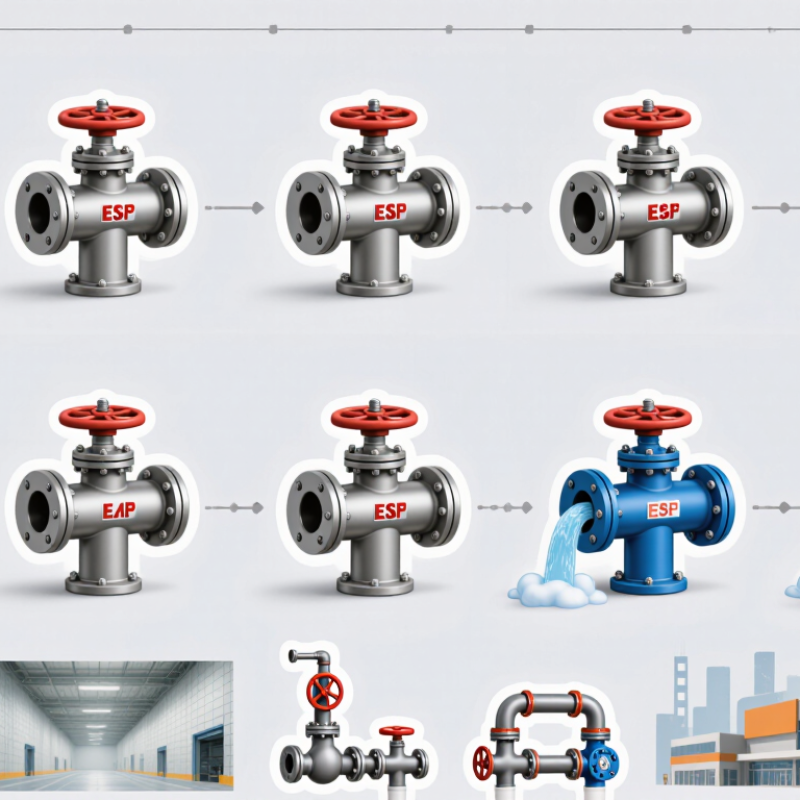
Fire sprinkler systems protect buildings by detecting heat and releasing water near the fire. Their classification depends on piping, activation speed, hazard level, and environmental conditions. The main systems are wet pipe, dry pipe, pre-action, and deluge.
Wet pipe systems hold pressurized water inside the pipes. They suit heated offices, warehouses, hotels, and retail areas. Dry pipe systems contain air until a sprinkler activates. They work better in unheated storage rooms or loading bays. Pre-action systems add a detection stage before water enters the pipes. This reduces accidental discharge risks in archives, data rooms, and museums. Deluge systems use open sprinklers and release water across an entire zone. They fit high-hazard areas where flames can spread quickly. The wrong choice can create serious delays.
Sprinkler head classifications also matter. Pendent heads hang below ceilings, while upright heads sit above exposed pipework. Sidewall heads help protect narrow rooms or spaces with limited ceiling access. Residential heads use different discharge patterns for living areas and sleeping rooms. Buyers should examine temperature ratings, response speed, coverage, pipe materials, and local approval requirements. A cold warehouse may need reliable freeze protection, not simply a dry system. A high-rack warehouse may require in-rack sprinklers and careful hydraulic calculations. Small details matter. I have seen specifications overlook ceiling obstructions, leaving hidden coverage gaps. Product data alone cannot replace a site survey, qualified design review, and regular inspection.
| No. | Sprinkler Type | Primary Classification | Response Characteristic | Typical Orientation | Common Applications | Main Advantages | Important Buyer Considerations |
|---|---|---|---|---|---|---|---|
| 1 | Standard Spray Sprinkler | Water-distribution type General-purpose | Usually standard-response; activation temperature is selected according to the ambient conditions. | Upright, pendent, or horizontal sidewall | Commercial buildings, offices, retail spaces, schools, warehouses, and ordinary-hazard areas. | Widely applicable, relatively simple to specify, and suitable for many light- and ordinary-hazard occupancies. | Discharge pattern and spacing must match the listing, design density, ceiling height, obstruction rules, and the applicable installation standard. |
| 2 | Quick-Response Sprinkler | Fast thermal response Life-safety focused | Uses a more thermally sensitive operating element than standard-response sprinklers. | Pendent, upright, sidewall, or concealed configurations depending on the listing | Light-hazard occupancies such as offices, hotels, residential-style areas, healthcare spaces, and educational buildings. | Can operate earlier in a developing fire and may support lower design criteria in permitted occupancies. | Quick-response and standard-response sprinklers are not automatically interchangeable; hydraulic calculations and listing requirements must be checked. |
| 3 | Residential Sprinkler | Residential application Quick response | Designed for rapid operation and a discharge pattern intended to control residential fire growth. | Pendent, sidewall, or concealed residential configuration | One- and two-family dwellings, apartments, hotels, dormitories, and other residential occupancies where permitted. | Designed around residential fire scenarios, room geometry, and occupant life safety. | Residential sprinklers have specific listing and design requirements and should not be substituted for commercial sprinklers without approval. |
| 4 | Extended Coverage Sprinkler | Large coverage area Special application | May be standard-response or quick-response, depending on the listed model and application. | Usually pendent, upright, or sidewall | Open-plan offices, retail areas, corridors, and selected light- or ordinary-hazard spaces with suitable ceiling conditions. | Can protect a larger approved floor area per sprinkler than conventional coverage products in specific applications. | Coverage area, spacing, minimum flow, ceiling height, obstructions, and pressure limits are strictly listing-dependent. |
| 5 | ESFR Sprinkler | Early Suppression Fast Response Storage protection | Fast response with high water discharge intended to suppress certain fires at an early stage. | Primarily pendent; some applications use specialized arrangements | High-piled storage, distribution warehouses, and selected commodity and storage configurations. | May allow protection of some storage arrangements without in-rack sprinklers when all design conditions are satisfied. | Requires careful review of commodity classification, storage height, ceiling height, flue spaces, obstructions, water supply, and the specific listing. |
| 6 | CMSA Sprinkler | Control Mode Specific Application Storage protection | Typically designed to control, rather than necessarily suppress, fires in specified storage arrangements. | Usually pendent or upright, according to the approved design | Selected rack-storage and high-piled storage applications with defined commodities and storage geometries. | Provides a storage-specific solution where the sprinkler listing and hydraulic design are appropriate. | Not a universal replacement for ESFR; design must consider storage arrangement, commodity, clearance, ceiling height, and required hose-stream allowance. |
| 7 | Dry Sprinkler | Dry-pipe compatible Low-temperature areas | Uses a sealed barrel or dry extension so water is kept out of the exposed portion until operation. | Pendent, upright, or sidewall; orientation depends on the listed product | Unheated warehouses, loading docks, parking garages, freezers, cold rooms, and exterior canopies. | Helps prevent water in the sprinkler branch piping from freezing in exposed cold areas. | Barrel length, allowable ambient temperature, pitch, dry-system arrangement, corrosion protection, and obstruction rules are critical. |
| 8 | Preaction Sprinkler | Special system Supervised activation | Water admission to the piping is controlled by a detection or supervisory system before sprinkler discharge, depending on the preaction arrangement. | Often pendent or upright; dry sprinklers may be used in cold spaces | Data-processing rooms, archives, museums, telecommunications areas, and spaces where accidental water release is a major concern. | Reduces the likelihood of water-filled piping before a confirmed detection event in appropriately designed systems. | Requires compatible detection, releasing, supervision, alarm, and valve-control equipment; it is more complex than a wet-pipe system. |
| 9 | Water Mist Nozzle | Fine water droplets Special hazard | Produces fine droplets using specially designed nozzles and, in some systems, elevated pressure. | Ceiling-mounted, wall-mounted, or equipment-directed according to the tested application | Machinery spaces, turbines, marine applications, transport facilities, and selected special hazards. | Can provide cooling, oxygen displacement, and fire-control effects with lower water volume in suitable applications. | Water mist is highly application-specific; nozzle selection, droplet characteristics, pressure, enclosure geometry, and system testing are essential. |
| 10 | Open Deluge Sprinkler or Nozzle | Open discharge Deluge system | No individual heat-sensitive closure; all connected outlets discharge when the deluge valve opens. | Open nozzles or open sprinklers installed in the required distribution pattern | Flammable-liquid hazards, process areas, aircraft hangars, transformers, conveyors, and exposure protection. | Provides simultaneous water discharge over a defined hazard area for rapid cooling, control, or exposure protection. | Requires a detection and releasing arrangement, substantial water supply, drainage capacity, and engineered hydraulic design. |
Related Posts
-
2026 Best Fire Sprinkler Types for Global Buyers
-
China's Premium Sprinkler Fire Protection: Elevating Quality and Dominating Global Markets
-

Understanding the Differences Between Various Fire Sprinkler Systems
-
7 Reasons Why Best Fire Sprinkler Cover is Essential for Your Safety
-
How to Choose the Best Home Sprinkler System for Your Needs?
-
10 Essential Tips for Successful Sprinkler Systems Installation?