What Are the Top Fire Protection Sprinkler Systems?

Choosing among Fire Protection Sprinkler Systems requires more than comparing product names. Building use, climate, water supply, ceiling height, and fire risk all influence the correct design. A warehouse storing plastic goods needs different protection from a hotel bedroom or a heated office.

Fire protection engineer Robert Solomon has emphasized that “sprinklers are the most effective way to protect a building from fire.” That observation remains practical. A properly selected system can activate near the fire’s origin, cool burning materials, limit smoke movement, and support evacuation. It cannot replace alarms, emergency planning, or trained responders.

This guide examines the leading system types. Wet-pipe systems are common in heated buildings because water remains inside the pipes. Dry-pipe systems use pressurized air in areas exposed to freezing temperatures. Preaction systems add detection controls before water enters the piping. Deluge systems release water through open nozzles across high-hazard spaces. Residential systems focus on fast response and occupant safety.

The strongest choice is not always the most complex one. Sometimes, complexity creates maintenance problems. That point deserves reflection. Design teams should review NFPA 13, NFPA 20, and NFPA 25, alongside applicable local requirements. Qualified fire protection professionals must verify hydraulic calculations, water-flow data, valve access, inspection schedules, and obstruction risks.

A reliable system is visible in small details: a labeled control valve, a clear sprinkler head, and a tested water-flow alarm. Those details matter. Performance depends on installation quality and continued inspection. This overview compares each system’s strengths, limitations, suitable applications, and practical maintenance demands.
What Are the Top Fire Protection Sprinkler Systems?

Fire Sprinkler Systems: Definition, Purpose, and Core Components

Fire sprinkler systems are fixed networks that control heat and slow fire growth. Their purpose is early response, not complete fire extinguishment. Each sprinkler head activates when heat reaches its rated temperature. Only affected heads usually discharge water. They do not simply “spray everywhere.” Wet-pipe systems are common in occupied buildings. Water remains inside the pipes, allowing rapid activation and straightforward maintenance.

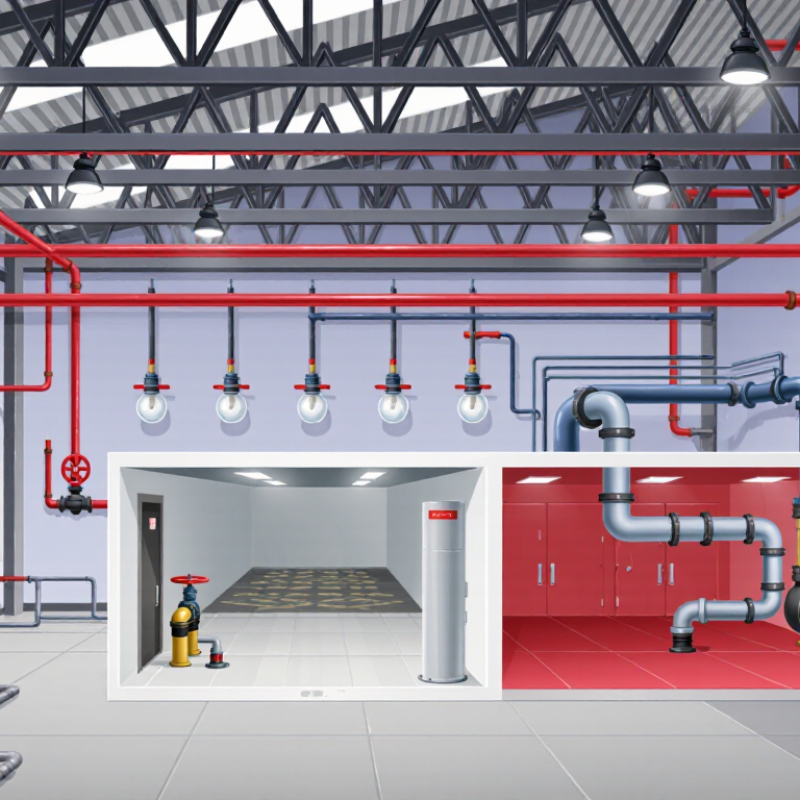
Dry-pipe systems hold pressurized air until heat opens a sprinkler. They suit garages, warehouses, and other unheated spaces. Pre-action systems add a detection signal before water enters the pipes. This design can reduce accidental water release in sensitive areas. Deluge systems use open sprinkler heads and release water together. They serve high-risk areas where fire can spread quickly. System selection depends on climate, occupancy, fuel load, and local code requirements. Oversimplification can create serious design problems.

Core components include a water supply, control valves, alarm devices, pipe networks, and sprinkler heads. Flow switches can notify a monitoring center after water movement begins. Pressure gauges help technicians identify abnormal conditions. A trained inspector checks blocked heads, closed valves, corrosion, and damaged pipes. Small details matter. Designers also calculate flow, pressure, spacing, and hydraulic demand. Yet no system is perfect. Poor maintenance, altered room layouts, or stored materials can weaken protection. Regular testing and accurate records remain essential.

How Wet Pipe Sprinkler Systems Operate in Standard Conditions

What Are the Top Fire Protection Sprinkler Systems?

How Wet Pipe Sprinkler Systems Operate in Standard Conditions

Wet pipe sprinkler systems remain a practical choice for heated buildings. Their pipes stay filled with pressurized water, ready for immediate discharge. Each sprinkler operates independently when heat breaks its glass bulb or melts its fusible element. Smoke alone does not activate the system. This distinction matters in offices, warehouses, apartments, and retail spaces.

During a fire, rising heat opens the nearest sprinkler head. Water then flows through the opening, triggering an alarm valve and waterflow device. The alarm signal alerts occupants and emergency responders while additional sprinklers activate only if heat spreads.

According to NFPA’s U.S. Experience with Sprinklers report, sprinklers operated in 92% of reported structure fires large enough to activate them. They were effective in 96% of those cases (NFPA, 2017).

Performance still depends on details. Correct spacing, adequate water pressure, clearances, and routine inspections support reliable operation. NFPA 25 requires periodic inspection, testing, and maintenance of water-based systems. A closed control valve can defeat an otherwise sound design. That is easy to overlook.

In practice, blocked storage arrangements and unauthorized ceiling changes also create risk. Professional assessment should follow NFPA 13 design requirements and local fire codes. Field conditions may expose weaknesses that drawings miss. Even strong systems deserve skeptical review.

When Dry, Pre-Action, and Deluge Systems Are Most Suitable

What Are the Top Fire Protection Sprinkler Systems?

When Dry, Pre-Action, and Deluge Systems Are Most Suitable

Choosing a fire sprinkler system starts with the building’s hazards, not a catalog. Dry, pre-action, and deluge systems solve different problems. A dry system keeps water out of pipes until heat opens a sprinkler. This design suits warehouses, loading bays, and unheated garages where freezing is possible. Compressed air holds the water back. When a sprinkler activates, air escapes and water enters the network. Response can be slower than wet systems, so design details matter.

Pre-action systems protect spaces where accidental water release could damage valuable contents. Museums, archive rooms, and electrical areas often need this extra control. A detection device usually opens a valve before sprinkler activation. Some designs require both detection and sprinkler operation. That two-step arrangement reduces unwanted discharge. It also adds controls, testing, and maintenance. Field inspections often reveal small maintenance gaps. A closed valve or weak air pressure can defeat a well-designed system. That is easy to underestimate.

Deluge systems use open sprinklers or nozzles, allowing water across the entire protected zone. They fit high-challenge areas, such as process spaces, aircraft shelters, and flammable-liquid handling zones. Detection releases the deluge valve, and every nozzle flows together. This rapid coverage can limit fire growth, but it demands reliable drainage and water supply. Engineers must calculate discharge, exposure, and operating duration. During commissioning, technicians should verify alarms, valve movement, pressure, and drainage under realistic conditions.

What Are the Top Fire Protection Sprinkler Systems? — When Dry, Pre-Action, and Deluge Systems Are Most Suitable

Comparison Dimension Wet-Pipe
Standard Sprinkler System
Dry-Pipe
Sprinkler System
Pre-Action
Sprinkler System
Deluge
Sprinkler System
How the System Works Pipes remain filled with pressurized water. Heat activates individual sprinklers, allowing water to discharge only from sprinklers exposed to sufficient heat. Pipes are filled with pressurized air or nitrogen. A heat-activated sprinkler opens first, allowing the valve to release water into the piping. A detection system operates the valve before water enters the piping. Water is then discharged when sprinklers activate, depending on the system configuration. Pipes remain open and normally contain air. A separate detection or manual release system opens the valve, allowing water to discharge through all open sprinklers simultaneously.
Best Operating Environment Heated buildings where pipe temperatures remain above freezing. Unheated or intermittently heated areas where freezing temperatures may occur. Areas where accidental water discharge could cause serious damage or where early warning is required. Locations where fire can spread rapidly and must be controlled over a large area immediately.
Most Suitable Applications Office buildings, apartments, schools, retail areas, warehouses, hotels, and other ordinary building spaces. Loading docks, parking garages, cold storage areas, exterior canopies, attics, and other spaces exposed to freezing conditions. Data processing rooms, museums, archives, clean rooms, telecommunications areas, and facilities containing water-sensitive equipment or materials. Aircraft hangars, chemical processing areas, flammable-liquid hazards, power-generation facilities, industrial risks, and areas with rapidly developing fires.
Sprinkler Type Normally closed, heat-sensitive sprinklers. Normally closed, heat-sensitive sprinklers. Normally closed, heat-sensitive sprinklers; the system may use single-interlock or double-interlock operation. Normally open sprinklers or open nozzles.
Water Delivery Behavior Water is available at the sprinkler as soon as the sprinkler opens. Water delivery is delayed because the dry valve must operate and water must travel through the piping. Water is admitted after detection and valve operation. A double-interlock arrangement generally requires both detection and sprinkler operation before water enters the piping. Water flows through every open sprinkler or nozzle in the protected zone after the deluge valve operates.
Risk of Unwanted Water Discharge Low, because individual sprinklers generally operate only when exposed to fire-level heat. Low, but a damaged sprinkler can release compressed air and may eventually cause water flow after valve operation. Very low in a properly configured double-interlock system because two independent conditions are required before water enters the piping. Higher, because activation of the release system can result in simultaneous discharge from all open sprinklers or nozzles in the zone.
Fire Response Characteristics Fast and efficient for most standard building fires because only sprinklers exposed to heat usually operate. Effective for ordinary hazards, but the air-filled piping introduces a measurable water-delivery delay. Provides early detection and controlled water admission, making it suitable where both fire protection and water-damage reduction are important. Provides rapid, high-volume application over the entire protected area for high-challenge or fast-spreading hazards.
Temperature Limitation Requires protection against freezing unless listed antifreeze solutions or other approved methods are used. Designed for areas where temperatures can fall below freezing, subject to the system design and pipe protection requirements. Can protect temperature-sensitive spaces when the piping arrangement and environmental conditions are properly designed. Can be used in freezing environments because the distribution piping is normally not filled with water, but all components must be suitable for the conditions.
System Complexity Lowest complexity and generally the simplest to install, inspect, test, and maintain. More complex than wet-pipe systems because it requires an air or nitrogen supply, a dry valve, and air-pressure supervision. High complexity because it requires detection equipment, release controls, supervision, and coordinated testing. High complexity because it requires a deluge valve, detection or manual release controls, water supply capacity, and zone discharge management.
Maintenance Priorities Routine sprinkler inspection, valve supervision, water-flow testing, alarm testing, and corrosion control. Air-pressure monitoring, dry-valve testing, low-point drainage, corrosion control, and inspection for trapped water or ice. Detection-system testing, release-circuit testing, valve supervision, air-pressure checks where applicable, and full trip testing. Detection and release testing, deluge-valve trip testing, open-nozzle inspection, water-supply verification, and post-discharge drainage.
Key Advantages Reliable, comparatively simple, fast water delivery, and efficient water use. Suitable for freezing conditions while retaining automatic sprinkler protection. Reduces the likelihood of accidental water entry into piping and supports early fire detection. Provides simultaneous coverage and rapid application for severe, high-growth fire hazards.
Main Limitations Not suitable for unheated areas subject to freezing unless specifically engineered for those conditions. Has slower water delivery than wet-pipe systems and requires additional equipment and maintenance. Costs more and requires careful coordination between the detection, releasing, alarm, and sprinkler systems. Uses substantial water, may cause extensive water damage after activation, and is unsuitable where individual-sprinkler operation is preferred.
Typical Selection Guidance Choose when the building is heated and a straightforward, dependable solution is appropriate. Choose when freezing temperatures are the primary concern and the water-delivery delay is acceptable. Choose when water damage must be minimized, early detection is valuable, or accidental discharge must be strongly controlled. Choose when the hazard demands immediate, simultaneous water application across the entire protected zone.
Common Design References Typically designed and installed in accordance with applicable editions of NFPA 13 and local building and fire codes. Typically designed and installed in accordance with applicable editions of NFPA 13, including requirements for dry-pipe systems. Typically designed and installed in accordance with applicable editions of NFPA 13 and the requirements governing automatic fire detection and releasing systems. Typically designed and installed in accordance with applicable editions of NFPA 13 and relevant requirements for deluge and water-spray systems.

Selection should be based on the hazard classification, building temperature, water supply, required response time, fire-load characteristics, environmental conditions, applicable codes, and a site-specific design prepared by a qualified fire-protection professional.

Comparing Sprinkler Types by Speed, Coverage, and Water Control

What Are the Top Fire Protection Sprinkler Systems?

Comparing Sprinkler Types by Speed, Coverage, and Water Control

Wet-pipe systems respond quickly because water remains inside the pipes. They suit heated offices, shops, and storage areas. Their coverage is predictable, but freezing temperatures create a serious weakness. A dry-pipe system holds pressurized air until heat opens a sprinkler. It protects cold warehouses, parking structures, and loading areas. Response can be slightly slower, and maintenance is usually more demanding.

Preaction systems add a detection step before releasing water into the pipes. This design helps limit accidental discharge in museums, server rooms, and sensitive facilities. Water control is strong, but installation and testing require careful coordination. Deluge systems open all connected sprinklers together after detection. They deliver intense coverage across high-hazard zones, such as chemical processing areas or aircraft maintenance spaces. Speed matters. Yet, water use can be substantial.

Tips: Match the system to temperature, fuel load, ceiling height, and occupancy. Check hydraulic calculations, obstruction risks, and inspection access with a qualified fire protection professional. ESFR sprinklers can control certain storage fires with fewer intermediate levels, but rack layout and storage height matter greatly. Never select a system from speed alone. A fast system with poor coverage may protect less effectively. Real buildings are imperfect, and assumptions can fail after renovations. Regular inspections reveal blocked heads, damaged pipes, and pressure problems before an emergency tests the design.

Selecting the Right Fire Protection Sprinkler System for a Building

What Are the Top Fire Protection Sprinkler Systems?

Selecting the Right Fire Protection Sprinkler System for a Building

Choosing a fire protection sprinkler system requires more than comparing equipment types. The building’s use, temperature, storage arrangement, and water supply all influence the decision.

Wet-pipe systems suit heated buildings with stable indoor temperatures. They respond quickly and usually offer straightforward maintenance. Dry-pipe systems serve unheated areas, such as parking garages or loading spaces. They use pressurized air to prevent freezing. Preaction systems add a detection step before water enters the pipes. This design can reduce accidental discharge risks in data rooms, archives, and museums. Deluge systems release water through open sprinklers when a detection system activates. They fit high-hazard areas where fire can spread rapidly.

Each option has limits.

During a site assessment, experienced designers examine ceiling height, fuel loads, fire compartments, and access for inspection. Storage racks can change the required sprinkler arrangement. Unheated loading bays may need freeze protection and careful drainage. Condensation matters, too.

A reliable design follows applicable fire codes, approved engineering practices, and local authority requirements. Hydraulic calculations should confirm that pressure and flow can reach the most demanding area. Qualified professionals should also document inspection points, alarm interfaces, testing schedules, and maintenance access.

One practical lesson is easy to miss: a system can be technically correct but poorly suited to daily operations. A busy warehouse may block valves or damage exposed piping. An unusual ceiling layout may weaken coverage. Site conditions deserve another review before installation.